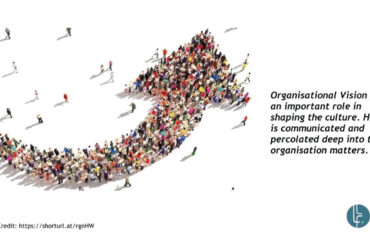

Like living beings constantly evolve, organizations are shaped by ever-changing marketplace landscapes. Shifting customer needs are forces driving organizational change and development. Just as we require nurturing, learning, and growth, an organization’s progress needs dedicated curation—a “holding space” that scaffolds its structure and strengthens its core. Among the many facets of organizational growth, the most critical remains its people. While strategy and business processes undoubtedly hold importance, culture precedes everything. Peter Drucker famously stated, “Culture eats strategy for breakfast.”
The question, then, is: how does culture emerge? In my experience, culture is born out of the collective behavior of people in their work environment. Psychologist Kurt Lewin’s equation, B=f(P,E) (Behavior is a function of People in an Environment), speaks directly to this. An organization’s culture is shaped by its HR Systems and Talent Strategy, which define how employees are nurtured and and developed. Culture reflects how people interact, collaborate, and contribute within the organization’s unique environment. This collective behavior is shaped by evolving values—values cultivated, promoted, and upheld by the leadership.
The role of leadership in nurturing these values cannot be overstated. Leaders define the behaviors that eventually become organizational rituals, embedding values into everyday actions. A McKinsey study shows that companies with strong cultures have a 76% higher chance of sustaining high performance over time. This highlights that culture, more than strategy, drives sustainable success. Consistent reinforcement of values builds a thriving environment where people feel purpose, respect, and connection.
However, creating a culture aligned with an organization’s vision doesn’t happen accidentally. It requires intentional effort—coaching, mentoring, and strategic HR Systems and Talent Strategy that align people with the organization’s values. Leadership Coaching, in particular, plays a crucial role here. Effective coaching empowers leaders to act as culture bearers, enabling them to model values that resonate with employees. An HBR study found that leaders who engage in regular coaching are likelier to foster high levels of employee engagement and trust, directly impacting culture.
Building a strong is about fostering an environment where values are demonstrated, celebrated, and repeated—until they become an inseparable part of the organization’s DNA. By investing in people, developing leadership, and staying aligned with core values, organizations don’t just adapt to change; they thrive in it. The future belongs to those who understand that, at its heart, an organization is a living and breathing entity.
We Leaping Frog Frog would help support you in Driving Organizational Change and Development, HR Systems and Talent Strategy and Leadership Coaching. Write us at comm@leapingfrog.in